Optometry Workflow Optimization That Scales
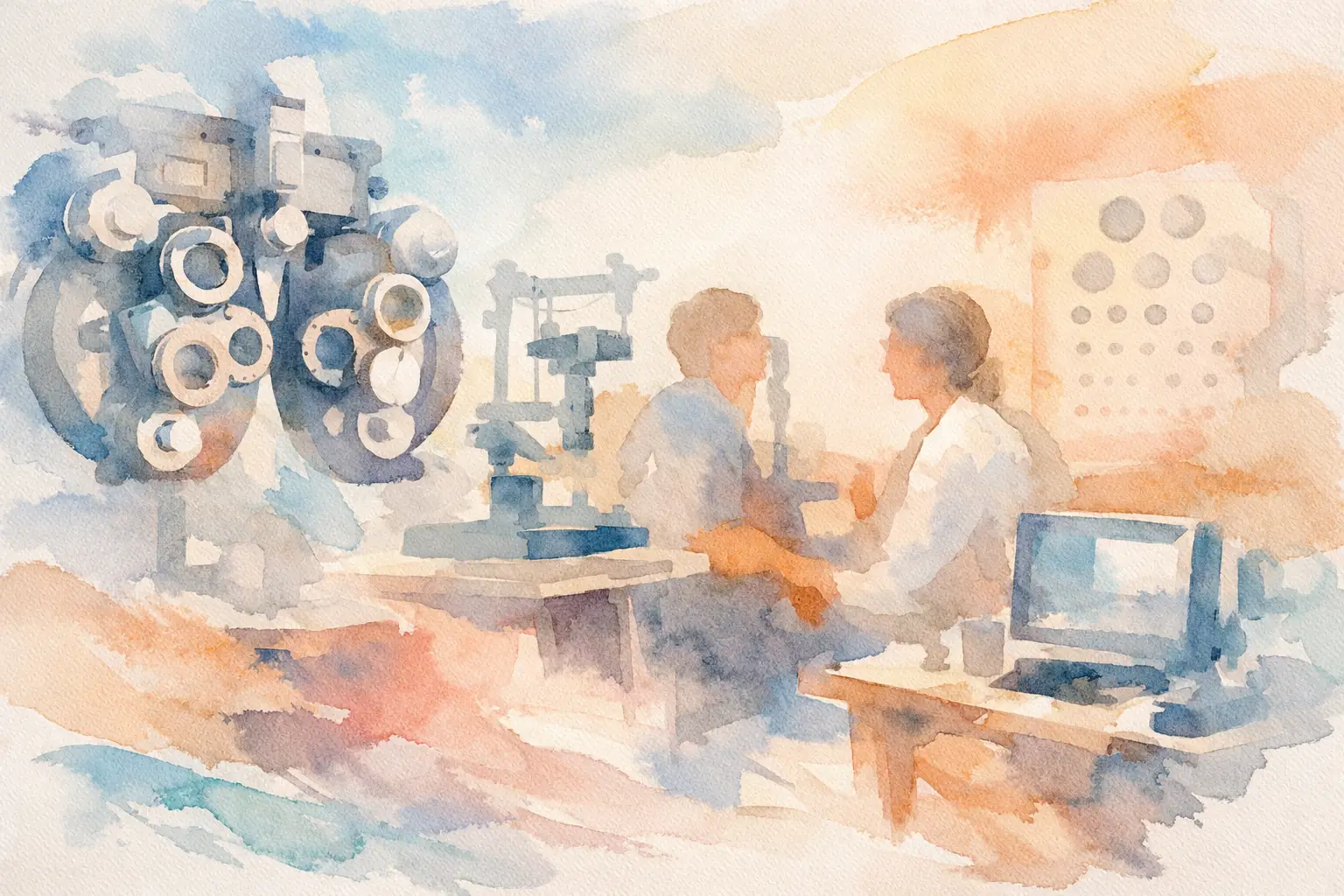
A full schedule does not guarantee a well-run practice. Many independent owners are seeing the same pattern: doctors moving constantly, staff staying busy, phones ringing all day, and yet the business still feels tight on margin, behind on follow-up, and too dependent on the owner. That is where optometry workflow optimization becomes a leadership issue, not just an efficiency project.
If your practice requires the doctor to intervene in scheduling, patient flow, optical handoffs, staff questions, and end-of-day cleanup, the real problem is not effort. It is operating design. Busy is not the same as productive, and productive is not the same as scalable.
What optometry workflow optimization actually means
In a private optometry practice, workflow is the sequence of decisions, handoffs, and actions that move a patient from appointment booking to completed care and collected revenue. Optimization means those steps are designed on purpose so the practice can deliver a consistent patient experience with less friction, fewer delays, and stronger financial performance.
That sounds straightforward, but most practices do not have a workflow. They have habits. Those habits formed over time around personalities, urgent fixes, and the owner’s availability. The result is a business that can function, but not one that can scale cleanly.
Strong workflow optimization does three things at once. It protects clinical quality, improves team throughput, and reduces the number of moments that require doctor rescue. If one of those is missing, the system is incomplete.
The hidden cost of inefficient workflows
Most owners notice workflow problems as stress before they measure them as economics. The technician is waiting on the doctor. Optical is unclear on the handoff. Front desk is double-booking around unpredictable exam times. Patients sit in the reception area longer than expected, then feel rushed once they reach the exam lane.
Each of those moments carries a cost. Some costs are obvious, such as lower daily capacity or missed capture in optical. Others are less visible but more serious over time: staff frustration, weak accountability, inconsistent patient experience, and an owner who cannot step away without service slipping.
This is why optometry workflow optimization matters at the leadership level. It affects revenue per day, labor efficiency, retention, patient satisfaction, and the long-term value of the business. A practice that only works when the owner is constantly managing details is harder to grow and harder to sell.
Start with bottlenecks, not software
Owners often assume the answer is a new platform, more automation, or additional hires. Sometimes those help. Often they simply allow a broken process to happen faster.
The better starting point is to identify the exact points where work stalls, repeats, or depends on one person. In most optometry practices, bottlenecks show up in a few predictable places: scheduling logic, pretesting flow, doctor exam transitions, optical handoff, check-out, and unassigned administrative work.
If your doctor routinely waits for workups, your issue may be staffing design or room readiness. If technicians are stacked up outside the doctor lane, your exam process may be too variable. If optical sales depend heavily on one top performer, your handoff and presentation system may be weak. If front desk spends the day answering preventable calls, your pre-visit communication may be underbuilt.
Optimization starts when you stop treating all delays as random. They are usually structural.
Map the patient journey in real operating terms
A useful workflow map is not a generic diagram on a whiteboard. It is a practical record of what happens, who owns each step, how long it takes, and what triggers the next action.
Begin with the major stages: scheduling, pre-visit confirmation, arrival, intake, pretesting, exam, optical, check-out, payment, and recall or follow-up. Then go deeper. Who confirms insurance eligibility? Who prepares the chart? When does the technician know the room is ready? What signals optical that the patient is about to be released? Who owns unscheduled follow-up tasks at the end of the visit?
This exercise usually reveals two problems. First, too many steps rely on verbal reminders. Second, too many responsibilities are shared vaguely rather than assigned clearly. Shared responsibility is often another name for neglected responsibility.
Standardization creates freedom
Many owners resist standardization because they do not want the practice to feel scripted or impersonal. That concern is reasonable, but in most cases it is misplaced. Patients do not experience strong systems as cold. They experience them as competent.
Standardization matters most in the routine parts of care delivery. The room setup should be consistent. The pretest sequence should be consistent. The doctor handoff should be consistent. The optical transition should be consistent. When those core actions happen the same way every time, your team has more capacity to be present, personal, and effective.
The real advantage is managerial. Standardization makes training faster, accountability clearer, and performance easier to measure. It also lowers the practice’s dependence on your strongest employee doing everything from memory.
Build roles around outcomes, not job descriptions
One of the biggest barriers to better workflow is role confusion. Staff members often know their broad title, but not the operational outcome they own. That creates hesitation, duplication, and unnecessary escalation to the doctor or manager.
A stronger model is to define each role by the result it is responsible for producing. Front desk is not just answering phones. It is responsible for schedule integrity, confirmation completion, and clean patient arrival. The technician is not just pretesting. That role is responsible for room readiness, data accuracy, and a smooth transition to doctor time. Optical is not just selling glasses. It is responsible for conversion, capture, and a confident final handoff.
When outcomes are clear, workflow improves because decisions stop floating. People know what they own.
Measure the right numbers for optometry workflow optimization
You do not need a complex dashboard to improve operations, but you do need more than instinct. A few disciplined metrics will expose whether your workflow is creating leverage or simply keeping everyone occupied.
Track exam cycle time, patient wait time, daily completed visits versus scheduled visits, optical capture rate, remakes or rework, and labor cost as a percentage of collections. Also watch how often the doctor gets pulled into non-doctor tasks. That number may not appear in your reports, but it is one of the clearest indicators of owner dependence.
Be careful with raw speed metrics. Faster is not always better. If shorter visits lead to weaker communication or lower optical conversion, the gain is false. The goal is not to rush the patient. The goal is to remove avoidable friction so the right parts of the visit get more attention.
Technology helps when the process is already clear
Technology should support workflow, not define it. Online scheduling, digital intake, automated reminders, recall systems, scribes, and reporting tools can improve performance. But each one works best when it is inserted into a disciplined process.
For example, automated reminders can reduce no-shows, but only if your scheduling rules are sound. Digital intake can shorten front-desk delays, but only if staff actually review the information before the patient reaches pretesting. Even AI tools and automation features have limits. If your team does not know who owns the next step, software will not fix that.
This is where mature practices separate from reactive ones. They implement technology after clarifying workflow logic, not before.
Leadership is the final lever
Most workflow problems are not caused by lazy teams. They are caused by tolerated ambiguity. If the owner changes the process day to day, accepts exceptions constantly, or steps in too quickly, the team never has a real chance to operate independently.
Leadership in this area means setting the standard, documenting the process, training to it, and correcting drift early. It also means accepting that optimization is iterative. A workflow that fits a two-doctor practice with one location may not fit a larger operation with expanded medical visits, specialty services, or heavier optical volume.
That is why serious owners review operations in phases. They tighten the core patient flow, then reassess staffing structure, doctor utilization, scheduling mix, and delegation. The objective is not perfection. It is a practice that performs well without requiring your constant presence.
For owners who want growth without becoming the bottleneck, workflow is not a side project. It is one of the highest-return decisions in the business. And when it is handled with discipline, the reward is bigger than efficiency. You gain a practice that feels calmer, produces more, and gives you back the one resource most owners have been overspending for years - your time.